Español
 Русский язык
 Português
 بالعربية
 Français
How to Select the Right Aluminum Cutting Machine for Different Processing Needs?
Selecting an aluminum cutting machine based on different processing requirements involves matching equipment types around three core dimensions: material parameters, precision requirements, and production capacity scale. This should be combined with auxiliary considerations such as safety and cost. The specific logic is as follows:
I. Anchor Core Processing Requirements to Match Basic Equipment Types
Select by Material Parameters
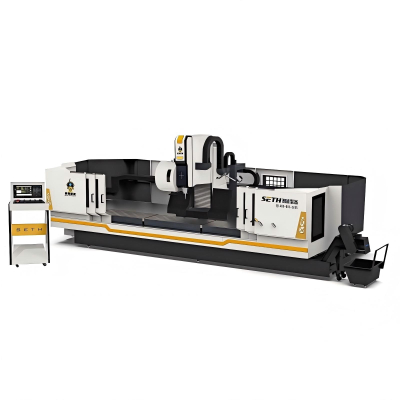
Identify the aluminum material type (pure aluminum / aluminum alloy / aluminum tubes/bars/sheets), thickness, and cross-sectional dimensions: Cutting large-format profiles like 120mm×80mm requires equipment matching the maximum cutting capacity. For thin aluminum parts (e.g., electronic enclosures) between 1-10mm, select high-speed specialized machines; for thick aluminum materials (e.g., aerospace components) between 100-200mm, use heavy-duty aluminum cutting machines.
Account for other materials: Copper cutting can use standard aluminum cutters, while stainless steel requires specialized blades and reduced speed.
Select based on precision requirements
High-end applications (electronics/aerospace): Choose fully automatic CNC aluminum cutters with ±0.05-0.1mm accuracy and ±0.1° angle tolerance for precision component machining.
Standard Applications (Building Doors/Windows / General Profiles): Semi-automatic models suffice, with ±0.2-0.5mm precision ensuring tight joint integrity.
Select by Production Capacity
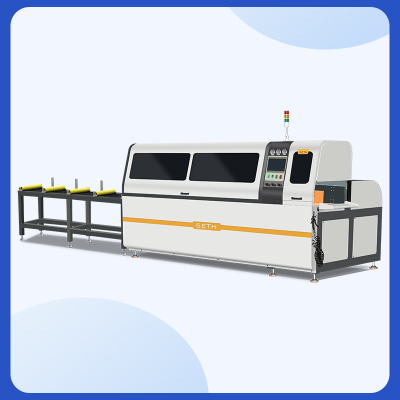
Small Batches / Low Frequency (Daily <500 pieces, e.g., small workshops): Manual aluminum cutting machine (¥15,800 - ¥38,000), offering flexible operation and low cost; or semi-automatic machine to reduce manual intervention.
Medium-volume (500-1000 pieces/day, e.g., small-to-medium window/door factories): Semi-automatic aluminum cutting machine, balancing efficiency and cost.
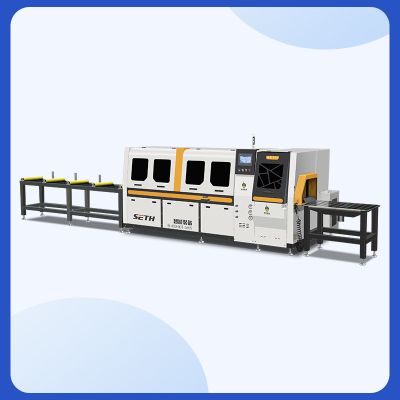
High-volume / Large-scale (1000+ pieces/day, e.g., automotive parts factories): Fully automatic CNC aluminum cutting machines, capable of 300-800 cuts per hour, achieving fully automated feeding, cutting, and material handling.
II. Optimizing Selection by Balancing Performance and Cost
Core Performance Matching
Power System: Small equipment requires 1.5-5kW motors; heavy-duty equipment needs 5-15kW motors. Prioritize servo motors for enhanced control precision.
Cutting Parameters: Match saw blade diameter (120-500mm) and rotational speed (3000-4500r/min) to material thickness. Feed rate: 20-30m/min for thin materials; reduce to 5-10m/min for thick materials to protect blades.
Long-Term Operational Assurance
Safety: Prioritize equipment with protective guards and infrared sensors (auto-stop upon human proximity).
Maintenance & Energy Efficiency: Select modular designs (easy blade/bearing replacement) and models with 30% lower energy consumption than traditional machines to reduce long-term costs.
Brand-Budget Balance
Under ¥50,000: Manual/economy semi-automatic machines (small workshops); For budgets between ¥100,000–300,000, select standard CNC machines (medium-sized enterprises);
Above ¥500,000, opt for customized high-end models (large factories / high-precision requirements).
Prioritize ISO 9001-certified brands (e.g., Deshang Environmental Protection, Jiangyin Haiqing) to ensure 1–2 years core warranty and 24-hour after-sales response.
III. Final Verification: On-site Test Cutting to Finalize Selection
Bring representative workpieces for test cutting, focusing on:
- Smoothness of cut edges
- Compliance with dimensional/angular tolerances
- Continuous 1-hour operation without noticeable vibration or abnormal noise
- User-friendly interface
Equipment meeting these criteria is suitable.