|
Language
 Español
 Русский язык
 Português
 بالعربية
 Français
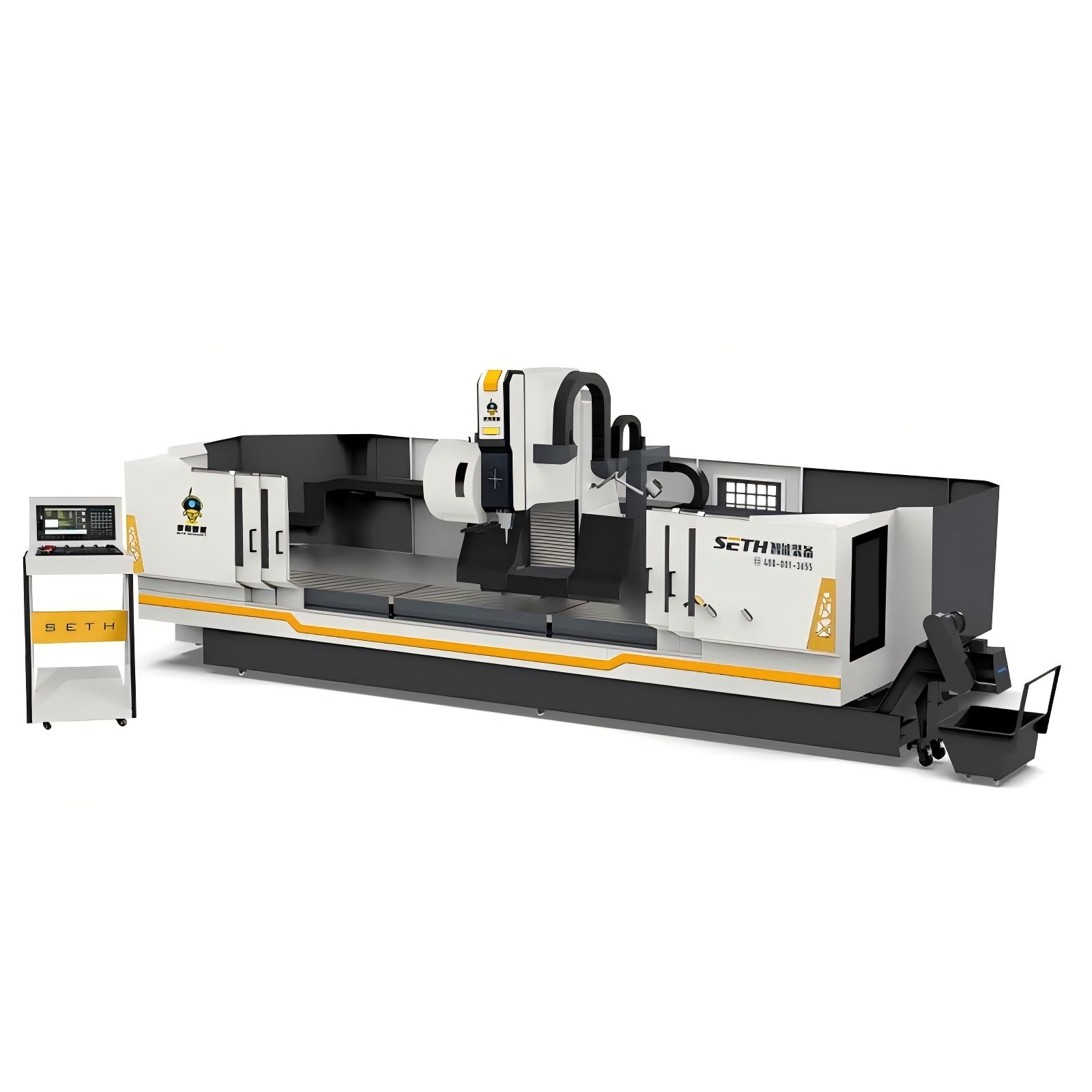
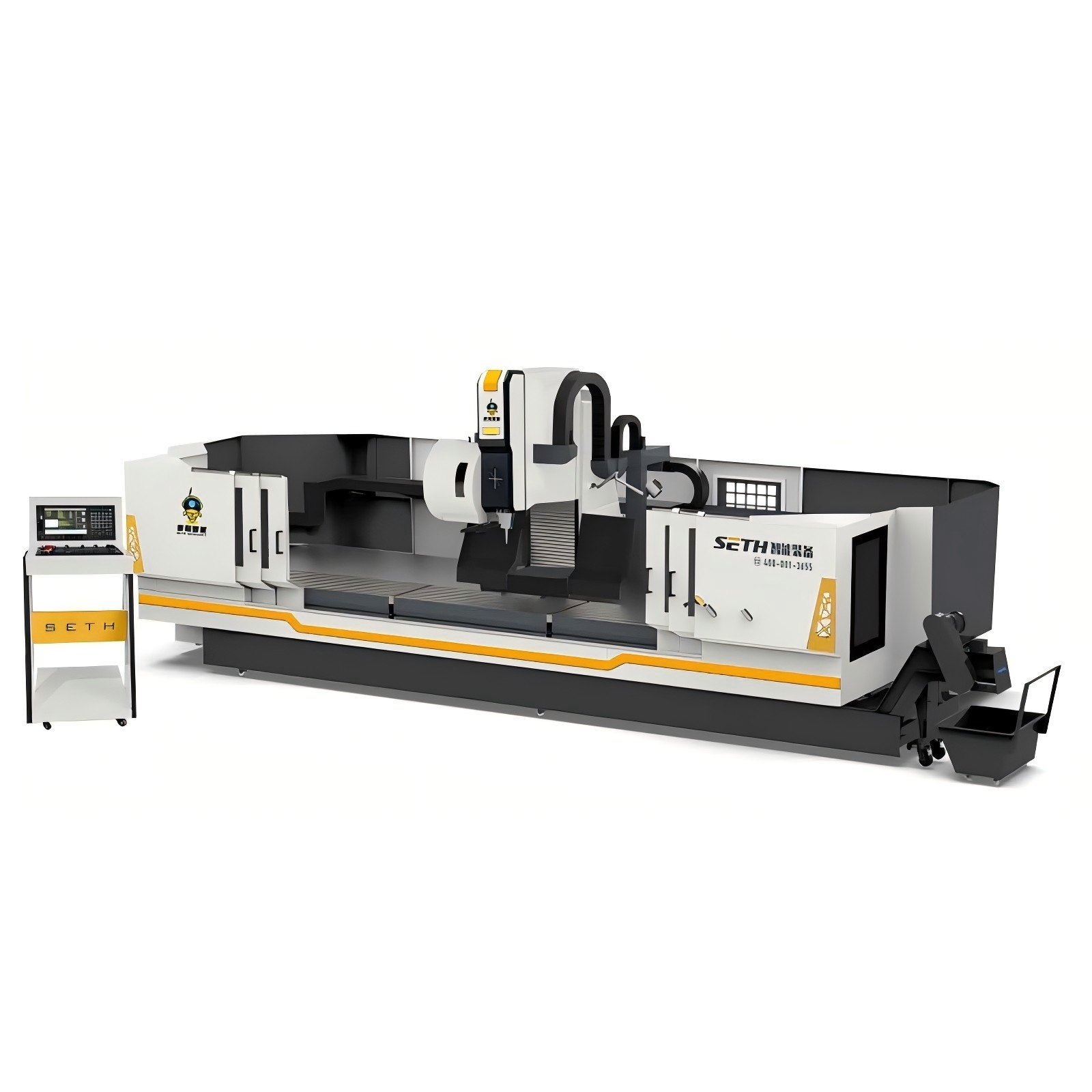
CNC Machining Centres for Drilling milling tapping engraving
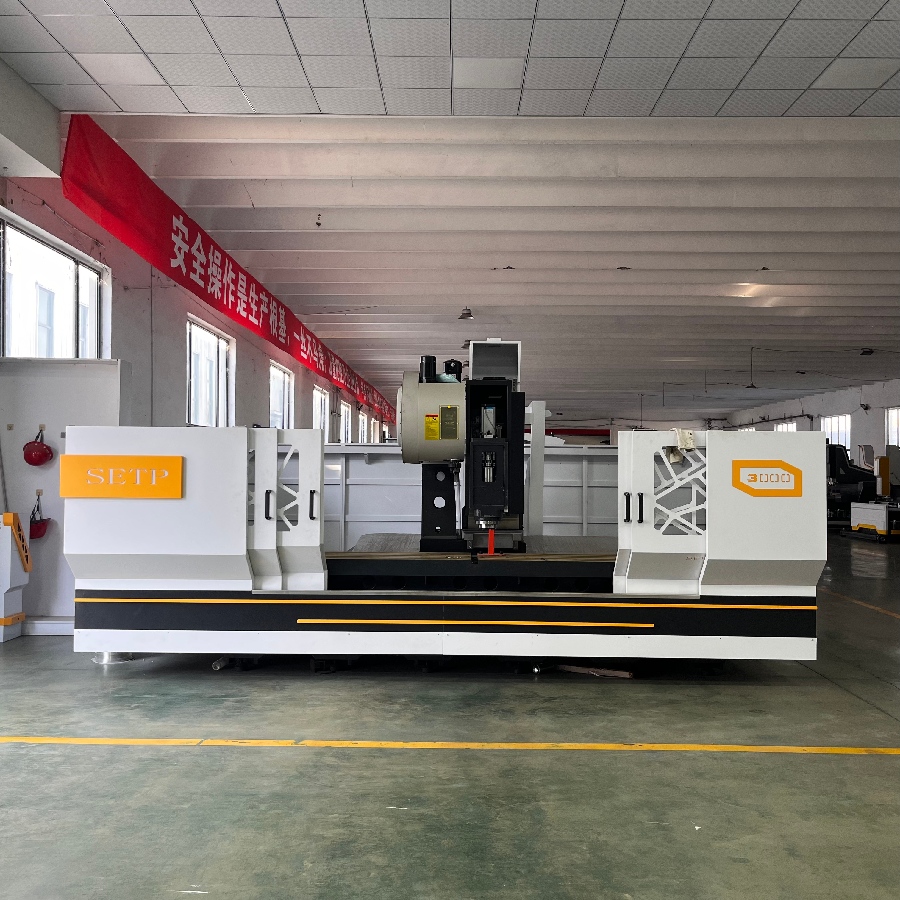
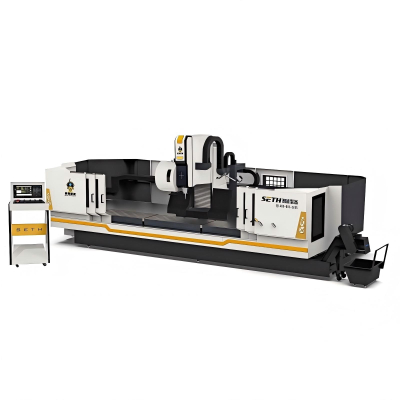
Gantry-type profile machining centers are high-precision, high-efficiency processing equipment designed for long, heavy-duty profiles. Their core advantages lie in extended travel, high rigidity, and multi-process integration, making them widely used in mid-to-high-end manufacturing sectors.
Core Features
Features a gantry-style frame structure with a bed typically constructed from HT300 high-strength cast iron or welded steel. Undergoes stress-relief aging treatment to eliminate internal stresses, delivering strong vibration resistance.
Integrated capabilities include milling, drilling, tapping, cutting, and slotting. Supports multi-axis coordination (typically 3-5 axes), enabling complex machining with a single setup.
Equipped with high-precision linear guides, ball screws, and servo drive systems, achieving positioning accuracy of ±0.01-0.02mm and repeatability of ±0.005-0.01mm.
Features a large-travel design with typical X-axis travel of 6-12 meters (customizable for greater lengths), accommodating continuous machining of long profiles. Select models support dual-side machining.
Key Technical Parameters
Travel Parameters: X-axis 6000-12000mm, Y-axis 500-1000mm, Z-axis 600-800mm. Select models include W-axis (auxiliary feed).
Spindle Performance: Spindle power 11-37kW, max speed 8000-15000rpm, supports BT40/BT50 tool holders for various tool specifications.
Processing Capability: Handles profile cross-sections ≤500×500mm, processes profiles weighing up to several tons, cuts carbon steel ≤80mm thick.
Control and Operation: Equipped with high-end CNC systems such as FANUC and Siemens, featuring 15-19 inch touchscreens. Supports parametric programming and CAD/CAM import.
Product Details
Profile Machines are a category of mechanical equipment used for profile processing, encompassing various types such as CNC profile machines, profile cutting machines, and profile machining centers. They are widely applied in profile processing scenarios across multiple industries. Below is a detailed overview of their product features, technical specifications, application fields, and maintenance requirements:
Product Overview:
CNC Profile Machines: As core automated equipment for metal profile processing, they integrate multiple operations including cutting, drilling, milling grooves, and tapping. The machine body is typically fabricated from high-strength steel welded and stress-relieved, paired with high-precision linear guides and servo drive systems. They also offer intelligent advantages, such as built-in templates for thousands of processing parameters, support for parametric programming, and remote diagnostics and data analysis capabilities in some models. These machines can automatically record processing data and generate reports, facilitating production management.
Profile Cutting Machine: Also known as a grinding wheel saw, it utilizes a single-phase AC series-wound motor as its power source, driving parallel grinding wheels through a transmission mechanism for cutting. The structure includes a series-wound motor, guard frame, and adjustable clamping jaws. The jaw angle is flexibly adjustable, enabling 90° straight cuts and 0–45° bevel cuts. It features simple operation and a smooth cut surface, making it suitable for cutting small to medium-sized profiles.
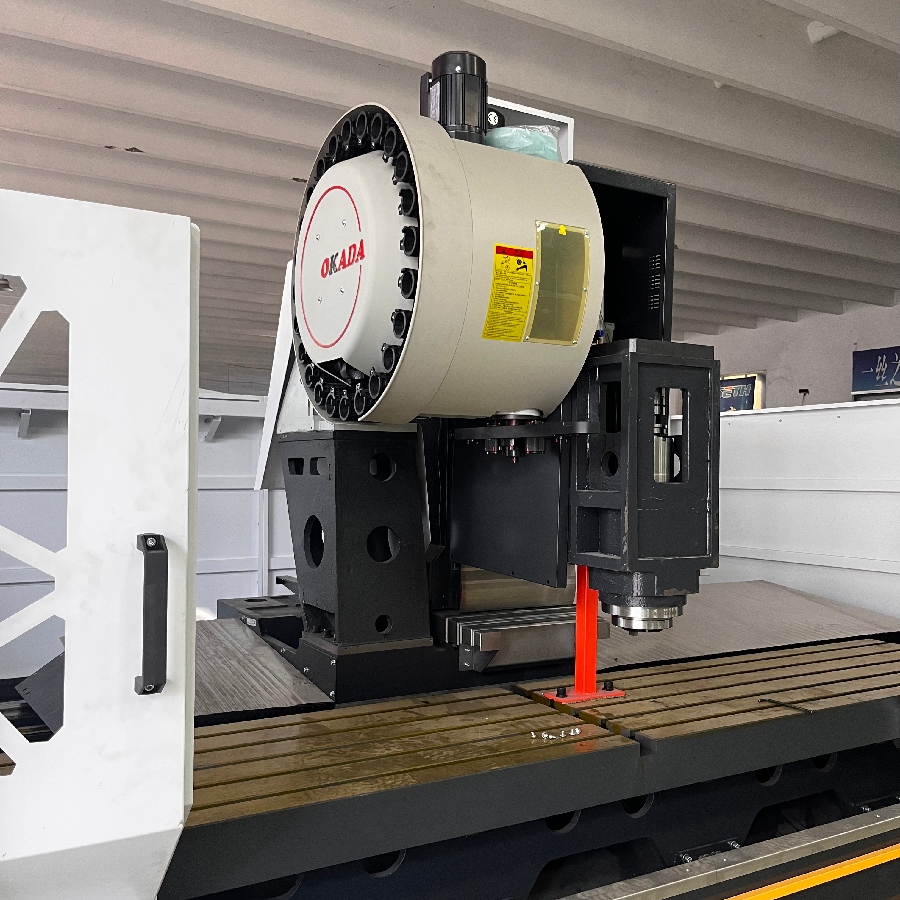
Profile Machining Centers (e.g., LS-65 Series): High-precision equipment for advanced manufacturing, featuring modular design and five-axis interpolation technology. The bed is typically constructed from HT300 cast iron for superior vibration resistance. It supports multi-axis coordinated motion, integrates complex processes, and resolves the issue of significant clamping errors in traditional multi-process setups. Suitable for machining long workpieces and complex curved profiles.
Technical Specifications
Equipment Type Core Technical Parameters
CNC Profile Machine Positioning accuracy ±0.02mm, repeatability ±0.01mm; maximum processing length up to 6 meters; spindle power up to 37kW, capable of cutting 50mm thick carbon steel at 100mm/min cutting speed; equipped with 15-inch touchscreen, supports multi-section profile processing
Profile Cutting Machine Rated voltage 220V, AC frequency 50/60Hz; grinding wheel diameter ≤406mm, rated linear speed ≤80m/s; clamp adjustable 0–45°
Profile Machining Center (LS-65 Series) X-axis travel 6500mm, Y-axis 650mm, Z-axis 700mm; 3-axis rapid traverse speed 50m/min; Spindle power 11kW/18.5kW, max. speed 12000rpm; Positioning accuracy ±0.01mm; Surface roughness up to Ra0.8μm
Application Fields
General Manufacturing: CNC profile machines are widely used in door/window curtain walls, photovoltaic mounting systems, and warehouse shelving industries. Profile cutters serve construction, hardware, and plumbing sectors for cutting standard profiles like square/flat steel and channel steel.
High-End Manufacturing: Profile machining centers process rail transit vehicle beams, subway handrails, complex cavities in new energy vehicle battery trays, and high-precision titanium/aluminum alloy profiles for aerospace applications.
Other Fields: CNC profile machines also handle precision processing for medical devices and automotive structural components. Custom models support batch production for aluminum alloy manufacturers.
Maintenance and Care
Daily Maintenance: After each processing session, clean metal chips and oil residue from the equipment's surface and interior to prevent component corrosion and wear. Weekly inspections should include checking the lubrication system and replenishing lubricants promptly to avoid dry friction. Simultaneously verify electrical connections for looseness and ensure the pneumatic system operates stably to maintain normal equipment functionality.
Periodic Inspection: Conduct comprehensive quarterly inspections of critical components like spindles, guide rails, and lead screws to identify wear. Replace cutting tools promptly after approximately 500 hours of use. Evaluate spindle bearings every two years and replace as needed. Schedule manufacturer on-site calibration services every six months to verify precision parameters.
Special Protection: For CNC profile machines, guard the guideways against dust using dust covers to minimize wear. When machining high-temperature, heat-sensitive profiles, regularly inspect the cooling system to ensure high-pressure air cooling and other cooling devices function properly. When replacing grinding wheels or cutting tools, avoid over-tightening nuts to prevent component fractures. Immediately shut down the machine for inspection if vibration or spindle overheating occurs; never operate the equipment with faults.
Profile Machines are a category of mechanical equipment used for profile processing, encompassing various types such as CNC profile machines, profile cutting machines, and profile machining centers. They are widely applied in profile processing scenarios across multiple industries. Below is a detailed overview of their product features, technical specifications, application fields, and maintenance requirements:
Product Overview
CNC Profile Machines: As core automated equipment for metal profile processing, they integrate multiple operations including cutting, drilling, milling grooves, and tapping. The machine body is typically fabricated from high-strength steel welded and stress-relieved, paired with high-precision linear guides and servo drive systems. They also offer intelligent advantages, such as built-in templates for thousands of processing parameters, support for parametric programming, and remote diagnostics and data analysis capabilities in some models. These machines can automatically record processing data and generate reports, facilitating production management.
Profile Cutting Machine: Also known as a grinding wheel saw, it utilizes a single-phase AC series-wound motor as its power source, driving parallel grinding wheels through a transmission mechanism for cutting. The structure includes a series-wound motor, guard frame, and adjustable clamping jaws. The jaw angle is flexibly adjustable, enabling 90° straight cuts and 0–45° bevel cuts. It features simple operation and a smooth cut surface, making it suitable for cutting small to medium-sized profiles.
Profile Machining Centers (e.g., LS-65 Series): High-precision equipment for advanced manufacturing, featuring modular design and five-axis interpolation technology. The bed is typically constructed from HT300 cast iron for superior vibration resistance. It supports multi-axis coordinated motion, integrates complex processes, and resolves the issue of significant clamping errors in traditional multi-process setups. Suitable for machining long workpieces and complex curved profiles.
Technical Specifications
Equipment Type Core Technical Parameters
CNC Profile Machine Positioning accuracy ±0.02mm, repeatability ±0.01mm; maximum processing length up to 6 meters; spindle power up to 37kW, capable of cutting 50mm thick carbon steel at 100mm/min cutting speed; equipped with 15-inch touchscreen, supports multi-section profile processing
Profile Cutting Machine Rated voltage 220V, AC frequency 50/60Hz; grinding wheel diameter ≤406mm, rated linear speed ≤80m/s; clamp adjustable 0–45°
Profile Machining Center (LS-65 Series) X-axis travel 6500mm, Y-axis 650mm, Z-axis 700mm; 3-axis rapid traverse speed 50m/min; Spindle power 11kW/18.5kW, max. speed 12000rpm; Positioning accuracy ±0.01mm; Surface roughness up to Ra0.8μm
Application Fields
General Manufacturing: CNC profile machines are widely used in door/window curtain walls, photovoltaic mounting systems, and warehouse shelving industries. Profile cutters serve construction, hardware, and plumbing sectors for cutting standard profiles like square/flat steel and channel steel.
High-End Manufacturing: Profile machining centers process rail transit vehicle beams, subway handrails, complex cavities in new energy vehicle battery trays, and high-precision titanium/aluminum alloy profiles for aerospace applications.
Other Fields: CNC profile machines also handle precision processing for medical devices and automotive structural components. Custom models support batch production for aluminum alloy manufacturers.
Maintenance and Care
Daily Maintenance: After each processing session, clean metal chips and oil residue from the equipment's surface and interior to prevent component corrosion and wear. Weekly inspections should include checking the lubrication system and replenishing lubricants promptly to avoid dry friction. Simultaneously verify electrical connections for looseness and ensure the pneumatic system operates stably to maintain normal equipment functionality.
Periodic Inspection: Conduct comprehensive quarterly inspections of critical components like spindles, guide rails, and lead screws to identify wear. Replace cutting tools promptly after approximately 500 hours of use. Evaluate spindle bearings every two years and replace as needed. Schedule manufacturer on-site calibration services every six months to verify precision parameters.
Special Protection: For CNC profile machines, guard the guideways against dust using dust covers to minimize wear. When machining high-temperature, heat-sensitive profiles, regularly inspect the cooling system to ensure high-pressure air cooling and other cooling devices function properly. When replacing grinding wheels or cutting tools, avoid over-tightening nuts to prevent component fractures. Immediately shut down the machine for inspection if vibration or spindle overheating occurs; never operate the equipment with faults.
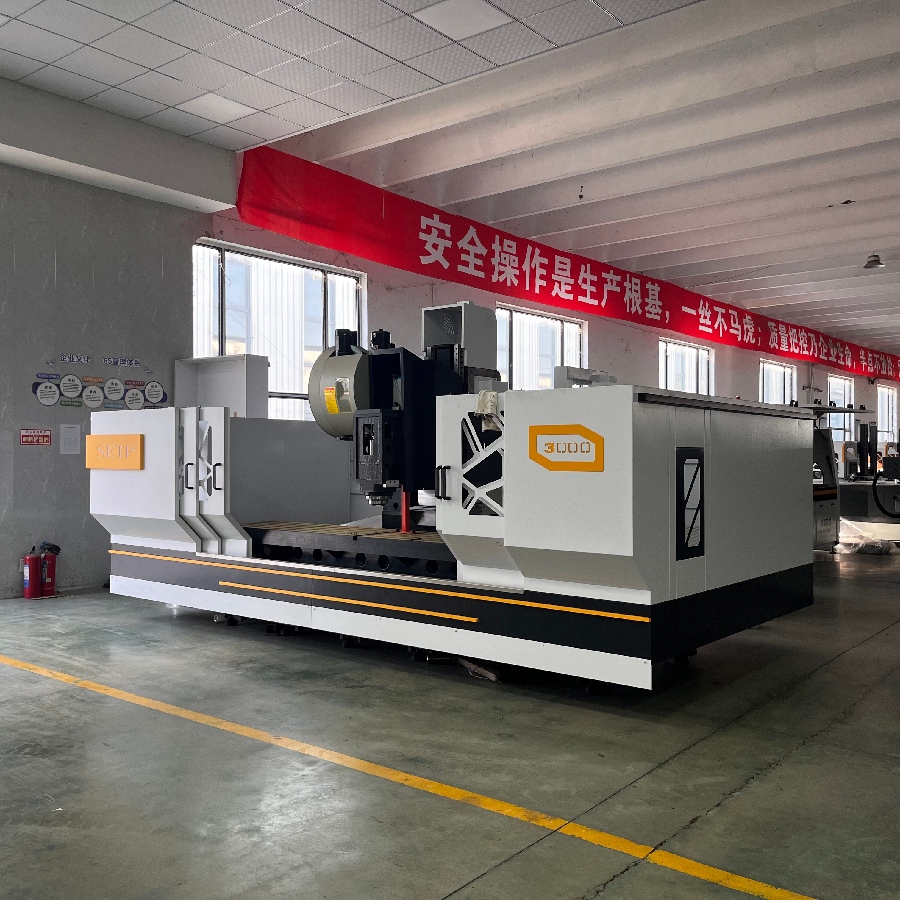
The 3 axis shaft profile machine is a common profile processing equipment characterized by compact structure, simple operation, and high cost-effectiveness, capable of meeting diverse profile processing requirements. Below is its product introduction and technical specifications:
Product Introduction
Structural Features: Typically employs moving column or gantry structures. For instance, Jinan Saisi Intelligent Equipment's high-speed three-axis CNC profile machining center uses a moving column structure. In contrast, Shenzhen Jingdiao CNC Equipment Co., Ltd.'s three-head profile machining center SD3000-3Z-BT30 adopts a gantry-style motion structure with a cast iron bed for enhanced stability.
Functional Features: Integrates milling, drilling, tapping, chamfering, and other functions. Suitable for processing steel, stainless steel, industrial aluminum, and other materials. Widely applied in aerospace, machinery manufacturing, new energy vehicles, and related industries.
Control System: Some models feature imported CNC systems. For instance, Shandong Xinwuyue Intelligent Equipment's three-axis profile machining center uses a Japanese Fanuc system. Others utilize proprietary systems, such as Jingdiao CNC's SD3000-3Z-BT30 employing the Shendiao CNC system, offering user-friendly operation and high control precision.
Tool Magazine Systems: Various configurations exist, including arm-type and turret-type magazines. For instance, Jinan Saisi's high-speed three-axis CNC profile machining center utilizes an arm-type magazine with a 24-tool capacity, enabling rapid tool changes.
Machining centers are widely used across multiple industries including automotive manufacturing, aerospace, mold manufacturing, and 3C product manufacturing. Below are images showcasing their applications in different fields:
Automotive Manufacturing: Machining centers process critical components such as engine blocks and cylinder heads, ensuring precise component fitment.
Mold Manufacturing: In automotive headlight mold production, five-axis machining centers achieve mirror-finish polishing on core surfaces through inclined-plane five-axis simultaneous milling.
3C Product Manufacturing: Machining centers perform precision machining on metal enclosures and internal structural components for devices like smartphones and computers.
Medical Device Manufacturing: In orthopedic implant production, machining centers support direct programming from CT data to achieve customized cutting of titanium alloy bone plates.
Product form
Related Products
Related News
Popular products
Submitted successfully
We will contact you as soon as possible
Close